Spot the subtle key routes tucked quietly inside your escape run.
⌨️ Want to know where the cleanest escapes are hiding? Or just want to handle everyday runs like a tight hallway turn and a quick door dash without wiping out? A quick in-game test may reveal tricks you never knew your hands could pull off.
Explore the useful insights that could match your play style:
| Are You Using The Right Movement Timing? | How Fast Are Your Key Switches Really? |
| What Do Patterns Say About Safe Routes? | Share Your Trick With Friends |
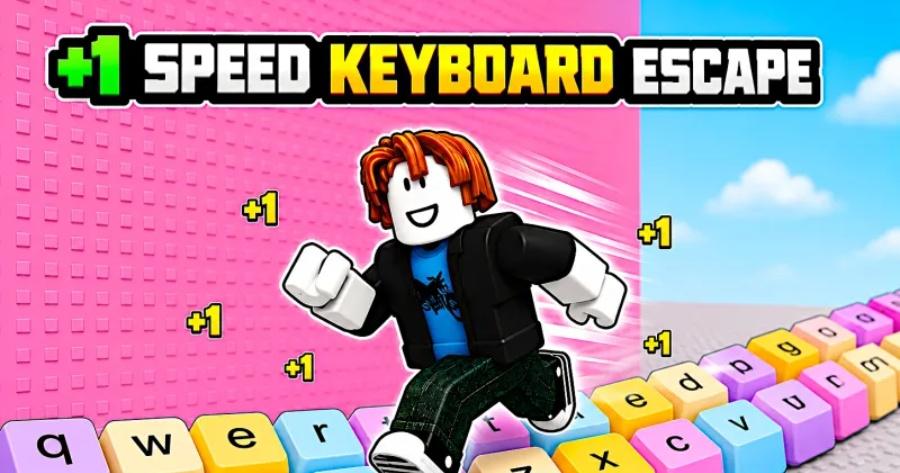
Look, if you've been grinding Roblox Speed Keyboard Escape with just the default move set and wondering why every lobby has at least three kids absolutely dusting you on the leaderboard, I've got good news and bad news. The good news is that there's a whole layer of tricks sitting underneath the surface that most players never bother to dig up. The bad news? Nobody tells you they exist. The game doesn't exactly hold your hand here, which is either charming or infuriating depending on how much patience you've got on a Tuesday evening.
I spent a solid couple of weeks poking around every corner of this game, unlocking what I could, failing spectacularly at what I couldn't, and what I found was honestly more depth than I expected from a Roblox title built around typing fast and not slamming into walls. Maybe "depth" isn't quite the right word. Let's call it layers. There are layers here, and peeling them back is where the real fun starts.
So let me save you the trial and error. Here's everything you need to know about unlocking more tricks, getting faster, and actually competing instead of just surviving.
Why You Should Even Bother With Advanced Tricks
I know, I know. You're already finishing rounds. You're doing fine. But "fine" in Speed Keyboard Escape is like finishing a race in the middle of the pack and calling it a victory. Sure, you crossed the line. But the kid in first place? They're running a completely different game than you are, and the gap between basic movement and advanced tricks is where that difference lives.
Here's what unlocking more tricks actually gets you in practical terms. Your course completion times drop noticeably, and in a game where placements are often separated by fractions of a second, cutting even a small window off your run is the difference between a podium finish and watching someone else grab the rewards. And those rewards matter more than you'd think. There are cosmetic items and profile badges locked behind specific trick-based challenges that you literally cannot earn through regular play. They don't show up in the shop. They don't drop from standard rounds. You either unlock them through advanced mechanics or you don't get them at all.
Beyond the loot, there's a gameplay argument too. Running the same basic patterns every round gets stale faster than you'd expect. Once you've memorized the default movement flow, rounds start blending together and you lose that edge of excitement that made the game fun in the first place. New tricks shake that up. They give you options, alternate routes through obstacles, and ways to approach courses that feel genuinely creative instead of robotic.
And here's a bonus that nobody talks about: the keyboard precision and split-second decision making you build in this game absolutely carries over to other titles. I noticed my inputs getting cleaner in completely unrelated games after a week of seriously practicing combination tricks. Your fingers just get sharper. That's not nothing.
Start With The Tutorial, And I Mean Actually Start With It
I can already hear the collective groan. Yes, you have to play through the tutorial levels. All five of them. No, you cannot skip ahead. And before you roll your eyes and speed through them like they're a formality, let me stop you right there because this is where most people shoot themselves in the foot before they've even started.
The tutorial stages aren't just there to teach you which keys do what. They're designed to build a foundation of timing and combination awareness that every single advanced trick in the game is built on top of. Skip the tutorial or rush through it without paying attention, and you're going to hit a wall later when advanced tricks demand precise multi-key inputs within a half-second window. You'll have no idea why your fingers aren't cooperating, and the answer will be that you never properly learned the basics that those moves are layered on top of.
Think of it like this. You wouldn't try to learn a guitar solo before you can play a chord cleanly. Same principle here. The tutorial teaches you the chords. Every trick you unlock later is a solo built from those same shapes. Get comfortable here first. It pays dividends later in ways that aren't immediately obvious.
Once you've cleared all five stages, you unlock the basic move set and, more importantly, you unlock access to the systems that actually let you earn and purchase advanced tricks. Without clearing the tutorial, those systems stay locked. It's the gate, and there's no side door.
The Daily Challenge Grind Is Where The Real Economy Lives
Here's where things start getting interesting and where I think the game does something genuinely clever. Every single day, three new movement-based challenges appear in the challenge tab. These might ask you to complete a course without missing a key press, finish three rounds in the top ten, or pull off a specific move sequence under time pressure. Each completed challenge rewards you with ten to twenty unlock points, and those points are the currency you use to buy new tricks from the in-game shop.
Now, the temptation is to ignore daily challenges when you're feeling lazy or when the specific tasks don't sound exciting. Don't do that. The unlock point economy in this game is tuned around consistent daily engagement, and if you're only checking in a couple of times a week, you're leaving a significant amount of currency on the table. Set a reminder on your phone if you have to. Some challenges have twenty-four hour expiration windows, so they genuinely disappear if you don't log in. Missing one here and there isn't the end of the world, but missing a whole week means you've lost sixty to a hundred and forty points that you're not getting back.
Here's a trick within the trick though. Weekend challenges tend to offer bonus points, and prioritizing those high-value tasks over the standard weekday ones is the fastest way to build your unlock pool. If you can only play a few sessions a week, make sure the weekend is one of them. The math works out significantly in your favor.
Spending Your Points Without Wasting Them
So you've got a pile of unlock points and you're staring at the tricks menu in the main lobby like a kid in a candy store. The immediate instinct is to go for the flashiest, most expensive trick on the list. I get it. It's shiny. It looks cool. But here's the thing, and this is where I've seen a lot of players make a mistake that takes them weeks to recover from. That expensive trick might be designed for a very specific course layout that only shows up occasionally. You've just dumped your entire savings into a move you'll rarely get to use.
Instead, start with the cheap stuff that has broad application. The quick side dash and the double jump extension are your best early purchases. They're affordable, they work on virtually every standard course layout, and they immediately shave time off your runs without requiring you to completely rewire your muscle memory. They're the foundational advanced moves, the ones that make everything else you learn later more effective because they expand your basic toolkit in ways that apply everywhere.
Save the niche, high-cost tricks for later, once you've got a solid base of versatile moves and you've identified which specific course types give you the most trouble. Then you can make targeted purchases that solve specific problems instead of hoping an expensive trick turns out to be universally useful. It usually won't be.
Practice Where Nobody's Watching
This is genuinely the most underrated piece of advice I can give, and it's something competitive players in every game already know but casual players almost never do. Create a private custom lobby. Adjust the settings so obstacle spawn speeds are slower and player competition is turned off. Then just practice.
I'm not talking about running a couple of rounds and calling it good. I mean dedicated practice sessions. Ten to fifteen minutes minimum, working on one specific trick at a time until you can execute it ten times consecutively without fumbling the key combination. Not eight out of ten. Not nine out of ten. Ten for ten. If you can't do it consistently in a zero-pressure environment, you absolutely cannot do it consistently when three other players are breathing down your neck and the course is throwing obstacles at full speed.
And here's a pro tip that competitive players have been doing since forever and that I genuinely think more people should adopt: record your practice runs. Even short clips. When you watch them back, you'll catch timing errors and hesitation patterns that are completely invisible to you while you're actually playing. Your brain is too busy executing to notice the half-second delay before your double jump, but on a replay it'll stick out like a sore thumb. Fix those micro-hesitations and your runs get noticeably cleaner.
The best part about private lobbies? None of this affects your competitive rank or your public stats. You can fail spectacularly for an entire session and your leaderboard position stays exactly where it is. There's zero downside. Use this space.
The Hidden Stuff Nobody Talks About
Alright, this is the section I was most excited to write because this is where Speed Keyboard Escape goes from a solid typing game to something that actually rewards exploration and curiosity in a way most Roblox titles don't.
Scattered across twelve of the game's most popular public courses are small, glowing secret tokens. They're not marked on any map. The game doesn't tell you they exist. You just have to find them. Collect three of these tokens in a single run, a single unbroken run, and you trigger a hidden trick quest. Complete the quest, which usually involves executing a specific move sequence under a tight time limit, and you earn an exclusive trick that is not available in the shop at any price.
Let me repeat that because it's important. These tricks cannot be purchased. You cannot grind unlock points to buy them. The only way to get them is to find the tokens, trigger the quest, and execute the challenge. This is the game rewarding the players who actually pay attention to their surroundings instead of just tunnel-visioning the finish line, and I think that's a fantastic design choice. It gives exploration-minded players something meaningful to chase and it creates a class of moves that genuinely feel earned rather than bought.
Beyond the hidden quests, the game's leveling system also gates a tier of endgame tricks behind player level milestones. Every five levels you gain from earning experience in public matches unlocks a new high-tier trick that isn't available through any other method. These endgame moves are the serious stuff. We're talking about tricks that let you skip entire sections of courses, which is a massive time advantage that fundamentally changes how you approach competitive runs. The catch is that leveling takes genuine time investment. You earn experience from every public match regardless of placement, so even rough rounds contribute, but the progression curve gets steeper as you climb. It's a long-term commitment.
The Stuff That Might Frustrate You
Let me be straight with you here because I'd be doing you a disservice if I pretended this was all smooth sailing. Speed Keyboard Escape has a learning curve that can feel genuinely punishing, especially with combination tricks. Some advanced moves require precise multi-key inputs within a window so tight that your first fifty attempts might feel completely hopeless. That's normal. It doesn't mean you can't learn them. It means you need to slow down, practice deliberate inputs at a pace your fingers can actually handle, and build the muscle memory gradually instead of trying to go full speed from the start. Ten minutes a day of slow, intentional practice beats an hour of frantic mashing every time.
There's also a compatibility issue that catches people off guard. Some community-created custom courses disable specific advanced tricks to keep competition balanced. If you jump into one of these courses and suddenly your best moves aren't working, it's not a bug. The course creator turned them off. Always check the course description before you join a match so you know what you're working with. Nothing is more demoralizing than practicing a trick for a week and then finding out it's blocked in the specific course you wanted to use it in.
And look, let's be real. Not every player is going to stick with this. The daily login requirement to keep up with challenges, the practice time investment, the frustration of failed inputs, it's a commitment. But for the people who do push through that initial friction, the reward is a version of the game that feels fundamentally different from what most casual players experience. Faster, more creative, more satisfying. Whether that trade-off is worth it is genuinely a personal call.
Where This All Leads
Here's the bottom line. Roblox Speed Keyboard Escape is one of those games that reveals more the harder you look at it. On the surface it's a typing speed game with obstacle courses. Underneath that surface there's a legitimate trick system with hidden quests, endgame unlocks, and a practice loop that rewards patience and deliberate improvement. Most players will never see it because they never push past the default move set.
You don't need to be exceptionally skilled to start unlocking advanced tricks. You need to be consistent. Clear the tutorials, do your daily challenges, spend your points wisely, practice in private lobbies, and keep your eyes open for those hidden tokens that nobody tells you about. Every session you put in builds on the last one, and the gap between where you are now and where you could be is probably smaller than you think.
Start with the tutorial levels today. Knock out your first daily challenge. Buy the quick side dash. Then go practice it until your fingers know the input before your brain does. That's the foundation. Everything else builds from there.