











Popular Reviews





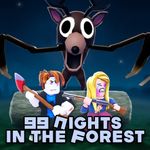
Roblox is a massive platform. Millions of games. Most of them are quick, colorful, and forgettable. Every so often, though, a game shows up that people actually talk about at school, at work, and on TikTok. 99 Nights in the Forest is that game right now. It looks simple. You are in a forest. You need to survive. But there is a monster in the dark. And there are four children missing. And every night is a little worse than the one before.
This review will walk you through what the game is, what makes it special, what it does well, what it does badly, and whether you should carve out an evening to try it. Fair warning: the game is designed to make you a little uncomfortable. That is part of the point.
What Is 99 Nights in the Forest?
99 Nights in the Forest is a survival horror game on Roblox, developed by Grandma's Favourite Games. The premise is simple. You are dropped into a dark, dangerous forest, and your job is to survive 99 in-game nights. Along the way, you need to find and rescue four missing children hidden across the map. It is free to play on Roblox, works with up to four players in coop, and can also be played completely solo.
The objective is to survive through 99 in-game nights in a dangerous forest filled with both natural and supernatural threats. Once you reach Night 99, you have officially beaten the game. Sounds simple. It is not.
The game blends resource gathering, base building, combat, and horror in a way that feels closer to a full standalone survival game than most Roblox experiences. If you have played The Forest, Don't Starve, or even Minecraft with a horror mod, you will recognize the DNA immediately. The difference is that this one runs on a phone, on a school laptop, and in your browser.
The Story: Four Missing Children and a Very Dark Forest
Most Roblox games do not bother with story. This one does, and it is a big part of why it works.
You are not just surviving. You are searching. Somewhere in this forest, there are four children who need to be found and rescued. Each child you save gives you a big time boost, which helps you survive the 99 nights faster. But finding them means going deeper into the forest than you would otherwise dare. You have to leave your safe camp. You have to explore biomes that are actively trying to kill you.
The game does not tell you the full story upfront. You piece it together through notes, environmental details, and the reactions of the children when you find them. Who took them? Why is the forest like this? What is the Deer Monster? The game trusts you to notice, and it rewards paying attention.
There are two endings. The "Redemption" good ending happens if you deliver the "Ancient Artifact" to the designated NPC before midnight on Day 100 and complete the final interaction. This triggers the positive ending animation showing forest restoration and child rescue success. The "Downfall" bad ending happens if you fail to complete the artifact delivery or if your character dies. Which ending you get depends on how you play the last few days. This gives the game a real weight that most Roblox titles do not have.
How the Day and Night Cycle Actually Works
The day/night cycle is the beating heart of this game. Every action you take is shaped by where you are in the cycle.
Daytime is safe for exploration, gathering resources, hunting, and building shelters. Dusk is a warning period—it is time to return to base, prepare your fire, and ready weapons. Night is when dangerous creatures appear, visibility drops drastically, and survival becomes the priority.
Think of each in-game day as three phases. In the morning, you run out and gather. Wood, stone, food, water, tools. You explore a little further than yesterday, because you need more of everything. Then, when the light starts to change color, you have a decision to make: keep pushing for one more resource, or head back to safety? Push too far and you will not make it home before dark. Head back too early and you will be behind on materials.
Then night falls. If your camp is well-built and your fire is burning, night can be quiet. If you did not prepare, night can end your run in about 30 seconds. This tension—preparation vs. reward—is what makes the game addictive.
Later in the game, the pattern changes. Around Day 5 or so, you notice the forest itself is different. Creatures appear that were not there before. The temperature drops. Sounds get worse. By Day 20, the game feels genuinely tense. By Day 50, you are not just surviving—you are managing multiple bases, tracking multiple threats, and constantly running low on something important.
The Deer Monster and Other Things That Hunt You
The main threat in 99 Nights in the Forest is a creature commonly called the Deer Monster. It comes out at night. It is tall. It is fast. And it hunts you.
Fan theories connect the Deer Monster to the Wendigo, a creature from Native American folklore. Many players believe it is a version of a terrifying creature from folklore. The developers have not confirmed anything, but the visual design and behavior strongly suggest they were inspired by that legend. If you know Wendigo lore, the pieces fit.
The Deer Monster is not the only threat, though. Predators intensify at dusk, hostile cultists emerge, and the supernatural takes root. Cultists are human enemies who attack your camp in groups. They can be fought with weapons but are dangerous in numbers. There are also cave guardians and creatures tied to specific biomes.
The way to survive early on is to stay near light sources. Your campfire is a shield, in more ways than one. Keep it burning. Never let it go out at night. If you must travel at night, carry a torch. The monster does not like light, and light gives you a fighting chance to see it before it sees you.
Solo or With Friends? The Coop Experience
You can play 99 Nights in the Forest completely alone. Many people do. But the game becomes something different—and, honestly, better—when you play with friends.
You can team up with up to 4 friends for cooperative survival, sharing resources, coordinating defense strategies, and working together to overcome the forest's challenges.
With four players, you can specialize. One person becomes the wood-cutter. One handles food gathering. One builds defenses. One scouts the map for missing children. This division of labor means you progress much faster than a solo player, but it also means every mistake hurts more. If your builder dies during a cultist raid, your base is exposed.
There is also just the emotional side of coop. Being in a dark forest at night is scary. Being in a dark forest at night with three friends screaming into voice chat about the Deer Monster running toward the base is not scary—it is one of the funniest gaming experiences you can have on Roblox. Many players say this game is designed for voice chat with friends, and I would agree. Playing solo is a survival puzzle. Playing with friends is a shared horror comedy.
For solo players, my honest advice: it is doable, but harder. You will not get the time-acceleration bonuses from rescuing children as easily. You will always be behind on resources. If you love pure single-player challenge, you will enjoy it. If you play games mainly for the social side, wait until a friend can join you.
Biomes and Locations Worth Exploring
Early on, you stay in the starting forest area. As you progress, the map opens up into different biomes, each with unique resources, dangers, and secrets.
The arrival of fresh biomes—Volcano, Bat Cave, Grove, and Arctic—adds layers of challenge. These biomes are no mere backdrop, but vital sources of advanced materials, dangerous creatures, and environmental threats.
The Volcano biome has hot, dangerous terrain but drops rare late-game materials that you cannot get elsewhere. Fire damage is a real concern, so bring protection.
The Bat Cave is dark, cramped, and full of hostile creatures. It is one of the best places to find upgraded tools, but you should never enter it unprepared. Bring a torch, a strong weapon, and food to recover if you take damage.
The Grove is often overlooked. It feels calmer than the other biomes, but there are enemies here that specifically counter cautious players. Do not let the peaceful mood fool you.
The Arctic biome introduces temperature management. Your character can freeze. You need warm clothing or nearby fires to survive here. The rewards, however, are worth the effort.
There is also the mysterious Pelt Trader, an NPC who appears periodically and sells advanced tools in exchange for animal pelts you have collected. The Strong Axe is one of the most reliable tools in the game and is available every fourth time the Pelt Trader appears on the map. Since the Pelt Trader takes three to four days to reappear, it can be about 16 in-game days before you find the Strong Axe in stock. Learning the Pelt Trader's cycle is essential for mid-game progression.
The Echoes System: Your Secret Weapon
One of the most interesting mechanics in the game is the Echoes system.
You can harness forest spirits (Echoes) to imbue weapons and tools with supernatural properties. Combining Echoes strategically creates powerful synergies against enemies.
Think of Echoes as enchantments. They give your weapons and tools bonus abilities. Some might increase damage against a specific enemy type. Others might heal you when you land a hit. Others let your torch burn longer.
The key is combination. Two well-chosen Echoes together can turn a basic weapon into a monster-slayer. Two poorly chosen Echoes just waste time and resources. This is where the game rewards experimentation. You will spend some runs discovering combinations that work for your playstyle.
Hidden Tips Most Players Learn Too Late
Here are the tips that will save you real time and probably a few runs.
Build multiple small bases, not one big one. After Day 50, late-game strategy involves building multiple "Emergency Shelters" around your main base for backup survival options during the final intense phases. If your main base falls, you have a fallback point.
Food never spoils. Stockpile aggressively. Focus on berries and mushrooms early game. If you locate wild boar or deer, prioritize hunting for meat-based foods that provide better stamina restoration. Meat gives more energy than plants. Fill your storage.
Craft the four essential tools on Day 1. Craft a Stone Axe, Stone Pickaxe, Simple Bed, and Basic Campfire on Day 1. These four items form your survival foundation. Do not spend Day 1 exploring. Spend it setting up. You will thank yourself on Night 1.
Rescue children early for time bonuses. Every child you save cuts down the time you spend on later nights. Prioritize finding them in the first 20 days, before the forest gets truly hostile.
Never let your campfire die at night. This is the single most common way new players lose runs. Feed the fire. Keep wood stockpiled next to it. If the fire dies, the Deer Monster can find you.
Track the Pelt Trader's schedule. Know when he will show up. Save your pelts. Buy the Strong Axe as soon as it appears.
Honest Pros and Cons of 99 Nights in the Forest
Time for the honest breakdown.
The strong points are the atmosphere, the day/night tension, the coop experience, the mystery story, the biome variety, and the fact that all of this runs on Roblox for free.
The first weakness is the difficulty curve. New players can lose their first few runs in the first 10 nights. There is no gentle onboarding. The game expects you to learn by dying. Some players love this. Others quit.
The second weakness is grinding. Progression takes real time. Rushing to Night 99 is not realistic in your first few sessions. If you want fast satisfaction, this is not that game.
The third weakness is Roblox performance. On lower-end phones and older PCs, the game can lag during raids or when many enemies are on screen. Nighttime lighting effects sometimes hurt frame rates.
The fourth weakness is the horror element for younger players. The Deer Monster is genuinely creepy. Some children under 10 may find it too intense. Parents should check first before letting a young child play alone at night.
The fifth weakness is that solo play feels significantly harder than coop. The game is balanced with friends in mind. Alone, you will need more skill and more patience.
Final Verdict: Should You Add It to Your Roblox Library?
Short answer: yes, especially if you have friends who play.
99 Nights in the Forest is one of the most well-made survival horror experiences currently available on Roblox. It has real atmosphere, real challenge, and real story—things that most Roblox games do not even try for. It is not perfect, but the imperfections feel like the kind of rough edges you get from a passionate small team, not from lazy design.
If you enjoy survival games like Don't Starve, Minecraft with mods, or The Forest, and you use Roblox, this should absolutely be on your list. If you have never enjoyed survival games before, this will not convert you—it plays exactly like the genre you might not like.
Play it with friends if you can. That is the best experience. Solo is fine but harder and less fun. Bring voice chat. Turn off the lights in your room. Give yourself an evening.
Rescue those children. Survive those 99 nights. Watch the ending you earned. And when it is over, you will probably want to jump into another run, this time knowing everything you did wrong the first time.
That is the mark of a good survival game. This is a good survival game.