











Popular Reviews







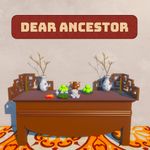
Most games ask you to win. Some ask you to survive. A very small number ask you to simply watch, and Dear Ancestor is one of them. This is a game where you never fight, never level up, never chase a high score. You sit at a family altar, in the space between the living and the dead, and observe generations of your descendants living their lives. Sometimes you bless them. Sometimes you stay silent. Both choices matter.
This is one of the most unusual indie releases to come out of Vietnam in years. Let's break down what it is, why it works, and who should try it.
What Is Dear Ancestor?
Dear Ancestor, known in Vietnamese as Thưa Gia Tiên, is a narrative-driven indie game developed by Huy Nguyễn (Tony). It is available on Windows via itch.io and on Android via various APK stores, with support for both English and Vietnamese languages.
Dear Ancestor is a narrative-driven experience that places players in the role of the ancestors, watching over generations of descendants from beyond the physical world. Rooted in Vietnamese spiritual culture and the long-standing tradition of ancestor veneration, the game explores the invisible yet powerful bond between the living and the dead. From the family altar, players observe the daily lives, struggles, and moral decisions of their descendants. As an ancestor, you are not an all-powerful ruler, but a guiding presence. You may choose to grant blessings or withhold them, based on how your descendants act, the values they uphold, and the respect they show toward their lineage and traditions.
If that description sounds unusual, that is because it is. This game does not have a genre in the traditional sense. It is somewhere between a visual novel, a life simulation, and a piece of interactive folklore.
The Cultural Foundation: Understanding Vietnamese Ancestor Veneration
To understand Dear Ancestor, it helps to understand the cultural tradition it is built on.
In Vietnamese culture, ancestor veneration is not just religion. It is a fundamental way of relating to family across generations. Ancestors are not gone. They are present, watching, influencing fortune and harmony within the household. Every Vietnamese family typically has a family altar—a dedicated space where photographs of deceased relatives are displayed, incense is burned, and food and offerings are placed on holidays and special occasions.
The living speak to the dead. They report important news. They ask for guidance. They apologize for failings. The ancestors, in turn, are believed to watch over their descendants, sometimes offering protection and blessings, sometimes withholding favor when descendants disrespect the family or its traditions.
Dear Ancestor turns this belief system into gameplay. You are not visiting the ancestors. You are the ancestor.
How the Gameplay Actually Works
Your interface is the family altar. You cannot leave. You cannot walk around. You watch and you choose.
Descendants appear on screen going about their lives. A grandchild deciding whether to help a neighbor. A great-great-grandchild choosing between a stable career and a risky passion. A distant descendant caring for their aging parent, or failing to.
At key moments, you have the option to grant a blessing or remain silent. Blessings subtly shift the direction of your descendant's life for the better. Silence lets them face consequences on their own. Neither is objectively right or wrong—the game asks you to weigh each situation on its own moral terms.
The game translates this belief into interactive storytelling. Players observe the daily lives of their descendants: their choices, hardships, ambitions, and ethical crossroads. You are not a god issuing commands.
The Emotional Weight of Small Decisions
What makes Dear Ancestor unusual is how emotional it becomes despite how simple it looks.
Your descendants are not abstract characters. They inherit personality traits from previous generations that you influenced. A great-grandchild's tendency toward generosity might trace back to a blessing you granted three generations ago. A distant relative's stubborn pride might come from a moment where you chose to stay silent, letting their ancestor face defeat.
The game maintains a hidden generational influence score that affects how future descendants behave. Actions echo. Consequences accumulate. Watching a family flourish across generations because of small blessings you granted decades ago is deeply satisfying.
Watching them fall because you were absent when needed—that hurts.
The Aesthetic Choices That Make It Work
Dear Ancestor is not a technically impressive game. The graphics are minimal. There is no voice acting. The soundtrack is quiet, meditative, sometimes just ambient sounds of home life.
None of this is a limitation. It is a deliberate design choice.
Horror is subtle and psychological, built through tone, silence, and implication rather than jumpscares. Familiar domestic spaces are recontextualized into eerie environments.
The game does have horror elements, but they are cultural horror—the fear of being forgotten, the fear of failing your family, the fear of watching descendants drift away from tradition. These are quiet fears. They do not need loud visuals to work.
The Choices That Matter Most
Not every choice in Dear Ancestor has equal weight. Some are small nudges. Others are pivot points that reshape a family's trajectory for generations.
The forgiveness choice: When a descendant makes a serious mistake, you can bless them anyway, letting them grow through the experience. Or you can withhold favor, letting the mistake become a lesson.
The tradition choice: When descendants abandon rituals—stopping altar offerings, forgetting anniversaries, marrying outside the family's cultural framework—you decide whether to remain a warm presence or a cold one.
The moral crossroads: When descendants must choose between right and easy, your blessing can tip the scale. But should it? Some players believe the ancestor should always favor the moral choice. Others believe descendants must find their own way.
These choices have no clear "correct" answers. That is the game's whole point.
Who Made It and Why
Huy Nguyễn (Tony) is an independent Vietnamese developer who created Dear Ancestor as a passion project. Unlike most indie games that draw from Western folklore or generic fantasy, Dear Ancestor centers Vietnamese cultural experience explicitly.
Dear Ancestor — known in Vietnamese as Thưa Gia Tiên — is one of the most talked-about indie games emerging from Vietnam's creative dev scene in 2025 – 2026. Instead of traditional game mechanics or fast-paced action, it offers a deep narrative, atmospheric storytelling, and a completely novel perspective.
The developer's stated goal was to explore the invisible bonds between generations of family. For Vietnamese players, this hits on cultural memories that few other games touch. For international players, it introduces a spiritual worldview that most Western games never engage with.
The Emotional Range Across a Playthrough
A single playthrough of Dear Ancestor takes only a few hours. But those hours cover generations of your family.
The first descendants are the ones you feel closest to. You knew them—or rather, they knew you. Watching them grow old and pass is emotional even for a video game.
The middle generations become abstract. You are watching descendants of descendants, people who never met you and never will. Your influence becomes more indirect, more accidental.
The final generations are the most poignant. Your family has spread. Traditions have shifted. Some descendants no longer visit the altar you sit at. Some have moved to other countries. Some have forgotten your name entirely. And yet, when they face a crossroads, you can still be there.
The final choice at the end—when the game asks you to reflect on what your influence has meant—is one of the quiet gaming moments people talk about for years.
Honest Weaknesses
Dear Ancestor is exceptional at what it does, but it is a small game with real limits.
Very short: As a narrative indie project, content length is relatively brief. Expect 2-4 hours for a complete playthrough. Some players find this too short for the emotional investment required.
Very passive: Limited gameplay interaction—the experience is mostly passive, which may not appeal to players seeking action. If you want mechanical challenge, this is not for you.
Niche appeal: The cultural depth is central to the experience. Players unfamiliar with Vietnamese traditions may miss layers of meaning. The game does not explain the culture—it assumes or immerses.
Technical rough edges: Reports mention game crashes when trying to open settings. This is an indie project, not a polished AAA release.
Minimal replay value: Multiple playthroughs offer different emotional outcomes, but the core experience is similar across runs.
Who Should Play Dear Ancestor?
The ideal audience:
-
Vietnamese players who want to see their culture represented in games with respect and depth
-
Narrative game enthusiasts who love titles like Firewatch, Gone Home, or What Remains of Edith Finch
-
Players curious about non-Western storytelling and worldviews
-
Anyone reflective who wants a game that lingers in the mind after finishing
Skip it if you:
-
Need constant action or challenge
-
Prefer high-budget production values
-
Do not enjoy slow-paced, meditative games
-
Want measurable progress or scoring systems
Tips for Getting the Most Out of the Experience
If you decide to play, here is what helps.
Take your time. The best way to engage with the game is to avoid rushing. When you slow down and truly observe each moment—each gesture, dialogue, and small environmental detail—the story becomes more meaningful.
Play in a quiet space. This is not a game for distraction. Turn off notifications. Put on headphones. Sit down like you would for a good book.
Consider your first blessing carefully. Your early choices have the largest ripple effects across generations. Do not spend your first blessings casually.
Try a second playthrough with different choices. Playing generously vs restrained produces meaningfully different family histories.
Reflect on your own family. Many players report that playing Dear Ancestor made them think about their real ancestors, their traditions, their own family relationships. That is what the game is for.
Final Verdict: Is Dear Ancestor Worth Playing?
Short answer: yes, if you value emotional and cultural storytelling over mechanical gameplay.
Dear Ancestor is not competing for your attention against action games or shooters. It is competing for space in your reflective moments. It succeeds because it is honest about what it wants to be: a small, quiet meditation on family, memory, and the invisible bonds across generations.
For Vietnamese players, this may be one of the most personally meaningful games of the year. For international players curious about non-Western storytelling, this is an accessible entry into a worldview you might not have considered.
Download it. Sit at the altar. Watch your family for a few hours. If it does not move you, at least you spent an afternoon with something genuinely different. If it does move you—and it probably will—you have found one of the small, quiet gems of 2026.