









Popular Reviews








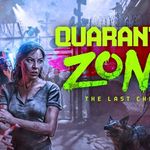
Some games ask you to shoot zombies. Some ask you to escape from them. Quarantine Zone: The Last Check asks you to do something much more disturbing: look at desperate survivors, examine their skin for infection signs, and decide with imperfect information whether they get to enter your safe camp or get sent to die at the hands of armed soldiers.
Released on January 12, 2026, this indie simulation game became one of the most-discussed launches of early 2026—not because it is a perfect game, but because it forces you into moral positions that no shooter ever does. Let's break down what it is, what works, and what does not.
What Is Quarantine Zone: The Last Check?
Quarantine Zone: The Last Check is a first-person zombie apocalypse simulation developed by Brigada Games and published by Devolver Digital. Released for Microsoft Windows on January 12, 2026, with a version for Xbox Series X/S set to release on July 15, 2026.
Quarantine Zone: The Last Check puts you in charge of a critical checkpoint during a zombie outbreak. Armed with advanced screening tools and your own instincts, you must decide who gets through and who stays behind. One wrong choice could let the infection slip past your post.
The comparison everyone makes is Papers, Please—the acclaimed 2013 game where you played a border checkpoint officer in a dystopian country. Quarantine Zone applies that same "moral bureaucracy simulator" formula to a zombie apocalypse setting. 'Quarantine Zone: The Last Check' is another border-simulator, much like 'Border Patrol' or 'Papers, Please'. The game is built around a simple yet unsettling idea: you are the final line of defence.
You are stationed at a military checkpoint in what appears to be New York City. Survivors approach one at a time. You examine them. You decide their fate.
How the Gameplay Actually Works
Every day, survivors line up at your checkpoint. Your job is to inspect them thoroughly and make a decision.
You have diagnostic tools:
-
Flashlight to examine their eyes for bloodshot or yellowed color
-
Reflex hammer to test their reactions
-
Scanner to detect concealed items or bites
-
Thermometer for fever readings
-
Handbook listing symptoms and infection markers
For each survivor, you check for signs listed in the handbook. Bloodshot eyes. Rashes. Necrosis (dead tissue). Bites. Yellowed skin. Unusual body temperature. Concealed items (contraband, weapons, illegal drugs).
After examination, you decide their fate:
-
Send to living block — they seem healthy, admit them to the camp
-
Send to quarantine — suspicious symptoms, hold them for observation
-
Send to lab — unknown symptoms need testing (this is often fatal to the subject)
-
Liquidate — clearly infected, they get executed by soldiers
Are their eyes clear, bloodshot, a bit yellow? How about their skin: do they have a rash, bruises, cuts, or some indication they've been bitten by a zombie? Check their pulse and temperature, whack them with a hammer to see if their reflexes seem normal, and compare their symptoms to what you know about the virus.
The Weight of Each Decision
What makes Quarantine Zone unusual is how uncomfortable each decision feels.
You have limited information. You have imperfect tools. You have time pressure. You have quotas. And you have a growing understanding that every choice has consequences beyond just this one survivor.
Let an infected survivor in? They will likely turn into a zombie overnight, kill others in the camp, and destroy your progress.
Send a healthy person to death? You just executed an innocent person because you were too cautious.
Send someone to the lab? They will likely die during testing, but you gain research points that unlock better tools.
I screwed up real bad in my first few in-game days of the latest Steam hit, Quarantine Zone: The Last Check. I let an infected person into the safe zone of our military-run camp. They turned into a zombie overnight, and I woke up to dead survivors.
The game rewards accuracy but punishes both false positives and false negatives. You are constantly making imperfect calls with permanent consequences.
The Base Management Layer
Beyond examinations, there is a base management component—though reviewers agree it is underdeveloped.
In addition to screening survivors, you have base management duties, but they're so basic they don't add much to the game. Keep food stocked, fuel in the generator, medkits in the sick bay, and spend money to upgrade your tools and base's capacity for survivors and defenses. In the demo of Quarantine Zone I played last year, you did these things manually by loading up a cart with supplies and pushing it around from place to place, but that feature has been cut and now you simply click a few buttons in a menu to restock.
The base gives you upgrade goals. Better tools. More capacity. Improved defenses. Bulletin board requests offer bonuses—$400 for each confirmed infected survivor, while bulletin board requests paid a steady $1,200.
At night, zombies sometimes attack the perimeter. You take control of a drone and defend the base with weapons and airstrikes. This mini-game is generally considered underwhelming compared to the main examination gameplay.
The Moral Complexity Nobody Expected
Playing Quarantine Zone in 2026 hits different than the developers probably intended.
And when I could disconnect what was happening in Quarantine Zone: The Last Check from the world I currently live in, I found myself having a good time succeeding at helping people. But then I'd check my phone and see what government-controlled soldiers are actually doing at a time when we aren't being eaten alive by zombies. The in-game soldiers and officials in Last Check have more restraint and empathy during a zombie apocalypse than the authorities walking our actual streets do right now.
The game's timing, with its themes of armed border checkpoints, decisions about who is worthy of entry, and the constant weighing of individual dignity against collective safety, resonates in ways it may not have if released in a different political moment.
Whether you find this contextual weight adds meaning or discomfort depends on your own experience. Either way, it makes the game more than just a Papers, Please clone.
The Length and Content
The full campaign takes under 12 hours to complete. Reviewers ran out of patience before running out of patients.
Its mixture of the bureaucracy analysis popularized by Papers Please, thrown into a zombie apocalypse setting, is, without a shadow of a doubt, very unique, and, at least at first, pretty engaging. Sadly, there's just not a lot meat in it to keep you invested for long. With such a short campaign and a one-note endless mode that doesn't add anything new to the table, you will have fun with it for a couple of hours, appreciate its creativity, and then move onto the next indie hit.
There is also an Endless Mode where the story framing disappears and you just survive as long as you can. Some players enjoy the pure gameplay loop; others find it repetitive without the story context.
The Weaknesses to Know About
Quarantine Zone has real problems that reviewers have called out.
Repetition sets in fast. After a few hours, you have seen most of the symptom types. Examinations become routine rather than tense.
Symptom clarity issues. Some symptoms are hard to identify visually. Necrosis is described as grotesque, pus-leaking decay, yet in practice it's just a black smudge that could be grease. Red skin might mean infection—or just sunburn. This creates false frustration rather than intended difficulty.
Bugs at launch. Multiple players reported soft-locks, missing key items, and other progression issues that had to be patched. The developer has been actively fixing these.
Underdeveloped base management. Features that were promising in the demo were cut for launch. What remains feels rushed.
Drone minigame is weak. The zombie defense mode feels like an afterthought.
Story is thin. Occasionally you'll also pilot a drone when zombies attack the perimeter, peppering them with bullets, bombs, and airstrikes. Beyond examinations and occasional dramatic events, the narrative is minimal.
Uncomfortable political timing. Some players cannot separate the game's themes from real-world border checkpoint conversations happening in 2026.
Who Should Play Quarantine Zone?
The ideal player is:
-
Papers, Please fans who want a similar experience in a zombie setting
-
Simulation game enthusiasts who enjoy bureaucratic tension
-
Players who appreciate moral complexity in games
-
Fans of decision-driven narratives where choices matter
-
Zombie genre lovers wanting something beyond typical shooters
Skip it if you:
-
Want fast-paced action or combat
-
Prefer clear right/wrong choices
-
Get frustrated by repetitive gameplay
-
Are politically sensitive to border enforcement themes
-
Need long single-player campaigns
Tips for New Players
If you dive in, here is what helps.
Study the handbook thoroughly. New symptoms unlock as you progress. Reviewing the handbook between shifts prevents mistakes.
Trust your instincts on gut calls. When symptoms are ambiguous, sometimes you have to make a judgment call. The game rewards decisive choices.
Use quarantine when unsure. It is the safest middle-ground option. You do not kill an innocent person, but you also do not risk infection.
Prioritize research upgrades. Better tools reveal more information about survivors. Invest in tool upgrades early.
Complete bulletin board requests. They pay well and add variety to your daily objectives.
Do not linger too long on each survivor. There is a time pressure element. Speed matters for meeting quotas.
Final Verdict: Is Quarantine Zone Worth Buying?
Short answer: yes, at the right price, for the right player.
Quarantine Zone: The Last Check holds mostly positive reviews on Steam with an 81% positive rating from over 5,000 reviews. It's a mid-range priced $19.99 game.
Quarantine Zone: The Last Check is a quiet, uncomfortable experience, and that's what makes it great. It doesn't shout or shock; it slowly pressures you, forcing you to live with the outcomes of imperfect information and impossible choices. While its systems don't yet have the depth to sustain long play sessions, the concept is strong, and the atmosphere is consistently effective. For players who enjoy decision-driven simulations with moral weight, this is a compelling, if modest, experience.
At $19.99, this is a decent value for the 10-12 hours of gameplay you get. If you love the concept, buy it now. If you are uncertain, wait for a sale—the game will likely hit $10-15 within a few months and be an easier recommendation at that price.
For fans of thoughtful indie simulations with real moral weight, Quarantine Zone is one of the more interesting releases of 2026. Just do not expect it to sustain 40+ hours of play like some of its peers.